
Gold has captivated human civilization for millennia, serving as a symbol of wealth, power, and beauty. Its history can be traced back to ancient cultures, where it was first used in jewelry and ornamentation. The earliest known gold artifacts date back to around 4000 BCE in the region of modern-day Bulgaria, where gold was fashioned into intricate jewelry.
The Egyptians, renowned for their advanced civilization, revered gold not only for its aesthetic appeal but also for its association with the divine. The famous burial mask of Tutankhamun, crafted from gold, exemplifies the material’s significance in ancient Egyptian culture, where it was believed to ensure a safe passage to the afterlife. As civilizations evolved, so did the role of gold in society.
By 600 BCE, the Lydians in what is now Turkey began minting coins made of electrum, a natural alloy of gold and silver. This innovation marked a pivotal moment in economic history, as it facilitated trade and commerce. Gold coins quickly spread throughout the Mediterranean and beyond, becoming a standard medium of exchange.
The Roman Empire further solidified gold’s status by using it to pay soldiers and fund public works, embedding it deeply into the fabric of economic systems. Throughout history, gold has been a constant, reflecting the changing dynamics of power and wealth across different eras.
Key Takeaways
- Gold has a rich history and cultural significance across civilizations.
- Its unique physical properties make it valuable in multiple industries.
- Gold mining involves complex extraction processes with environmental concerns.
- Ethical sourcing of gold is increasingly important in the market.
- Gold remains a popular choice for jewelry, investment, and future technological uses.
The Significance of Gold in Different Cultures
Gold’s significance transcends mere monetary value; it holds profound cultural meanings across various societies. In many cultures, gold is synonymous with purity and perfection. For instance, in Hinduism, gold is associated with the goddess Lakshmi, who embodies wealth and prosperity.
During festivals such as Diwali, it is customary for families to purchase gold as a means of inviting good fortune into their homes. Similarly, in Chinese culture, gold is considered auspicious and is often given as gifts during weddings and New Year celebrations to symbolize wealth and happiness. In contrast, indigenous cultures have also imbued gold with spiritual significance.
The Incas of South America referred to gold as “the sweat of the sun,” believing it to be a divine gift. They used gold not only for adornment but also in religious ceremonies and offerings to their gods. This reverence for gold can be seen in the elaborate gold artifacts discovered in archaeological sites throughout Peru.
Such examples illustrate how gold serves as a bridge between the material and spiritual realms across different cultures, reinforcing its status as a universal symbol of value. Click here to
Gold possesses unique physical and chemical properties that contribute to its desirability and utility. One of its most notable characteristics is its malleability; it can be hammered into thin sheets without breaking. A single ounce of gold can be stretched into a wire over 50 miles long or beaten into a sheet covering 300 square feet.
This property makes gold an ideal material for intricate designs in jewelry and decorative arts. Additionally, gold is highly ductile, allowing it to be drawn into fine wires that are essential in various applications. Another significant property of gold is its resistance to corrosion and tarnish.
Unlike many other metals, gold does not react with oxygen or moisture in the air, which means it retains its luster over time. This durability has made gold a preferred choice for coins and jewelry that are intended to last for generations. Furthermore, gold is an excellent conductor of electricity, which has led to its use in electronics and high-tech applications.
Its unique combination of beauty, durability, and conductivity ensures that gold remains a sought-after material across multiple domains.
The Uses of Gold in Various Industries
Gold’s versatility extends beyond jewelry and currency; it plays a crucial role in several industries due to its unique properties. In the electronics sector, gold is used extensively in the manufacturing of circuit boards and connectors because of its excellent conductivity and resistance to corrosion. For instance, smartphones and computers often contain small amounts of gold in their internal components, ensuring reliable performance over time.
The aerospace industry also utilizes gold for its reflective properties; it is used in satellite components to protect sensitive instruments from solar radiation. In medicine, gold has found applications in diagnostics and treatment. Gold nanoparticles are increasingly being used in targeted drug delivery systems due to their ability to attach to specific cells or tissues.
This innovative approach enhances the effectiveness of treatments while minimizing side effects. Additionally, gold compounds are employed in certain therapies for rheumatoid arthritis and cancer treatment. The diverse applications of gold across various industries underscore its importance not only as a precious metal but also as a critical resource for technological advancement and healthcare.
The Process of Mining and Extracting Gold
| Metric | Value | Unit | Description |
|---|---|---|---|
| Purity | 99.99 | % | Purity level of real gold (24 karat) |
| Density | 19.32 | g/cm³ | Density of pure gold at room temperature |
| Melting Point | 1064 | °C | Temperature at which gold melts |
| Boiling Point | 2856 | °C | Temperature at which gold boils |
| Electrical Conductivity | 45.2 | MS/m | Electrical conductivity of gold |
| Specific Heat Capacity | 0.129 | J/g·°C | Heat capacity of gold |
| Atomic Number | 79 | – | Atomic number of gold |
| Atomic Weight | 196.97 | g/mol | Atomic weight of gold |
The journey from raw ore to refined gold involves complex processes that require significant resources and expertise. Gold mining typically begins with exploration, where geologists use various techniques to locate potential deposits. Once a viable site is identified, mining operations commence, which can take several forms: open-pit mining, underground mining, or alluvial mining.
Open-pit mining involves removing large quantities of earth to access gold deposits near the surface, while underground mining requires digging tunnels to reach deeper veins. After extraction, the ore undergoes processing to separate the gold from other minerals. This often involves crushing the ore and using chemical methods such as cyanidation or amalgamation with mercury to isolate the gold particles.
Cyanidation is particularly prevalent; it involves dissolving gold in a cyanide solution before precipitating it out for further refinement. While these methods are effective at extracting gold, they also raise environmental concerns due to the toxic chemicals involved. As such, mining companies are increasingly exploring more sustainable practices to minimize their ecological footprint.
The Value of Gold in the Market
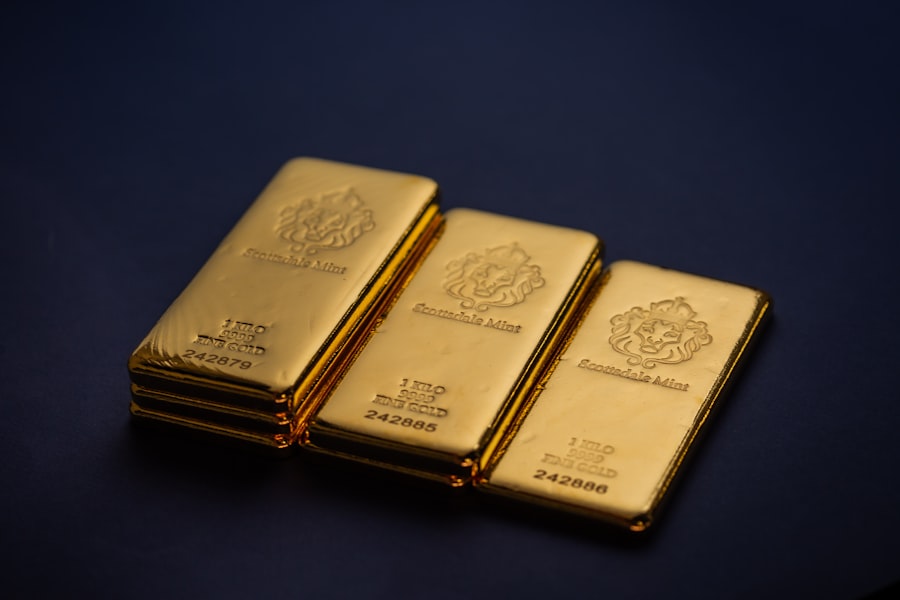
Gold’s value is influenced by a myriad of factors that reflect both economic conditions and investor sentiment. Traditionally viewed as a safe-haven asset, gold tends to perform well during times of economic uncertainty or geopolitical instability. For instance, during the 2008 financial crisis, investors flocked to gold as stock markets plummeted, driving up its price significantly.
The relationship between inflation rates and gold prices is also noteworthy; when inflation rises, the purchasing power of currency declines, prompting investors to seek refuge in tangible assets like gold. Market dynamics such as supply and demand further impact gold prices. Central banks around the world hold substantial reserves of gold as part of their monetary policy strategies, influencing market stability.
Additionally, fluctuations in mining output can affect supply levels; if major mines experience production issues or if new discoveries are limited, this can lead to price increases. The interplay between these factors creates a complex landscape for investors and traders alike, making gold an intriguing asset within financial markets.
The Allure of Gold Jewelry and Accessories
Gold jewelry has long been cherished for its beauty and status symbolization across cultures. From ancient Egyptian pharaohs adorned with elaborate golden regalia to modern-day brides wearing exquisite gold wedding bands, the allure of this precious metal remains timeless. The craftsmanship involved in creating gold jewelry often elevates it beyond mere adornment; artisans employ techniques such as filigree, engraving, and stone setting to produce pieces that tell stories or convey personal significance.
The emotional connection people have with gold jewelry adds another layer to its allure. Heirloom pieces passed down through generations carry sentimental value that transcends their material worth. For many cultures, gifting gold jewelry during significant life events—such as weddings or births—serves as a gesture of love and commitment.
This cultural significance ensures that gold jewelry remains not only a fashion statement but also an integral part of personal narratives and traditions.
The Investment Potential of Gold
Investing in gold has been a strategy employed by individuals seeking to diversify their portfolios and hedge against economic volatility. Unlike stocks or bonds that can fluctuate dramatically based on market conditions, gold often retains intrinsic value over time. Investors typically turn to physical forms of gold—such as coins or bars—as well as financial instruments like exchange-traded funds (ETFs) that track the price of gold without requiring physical storage.
The allure of gold as an investment lies in its historical performance during economic downturns; it has consistently demonstrated resilience when other assets falter. For example, during periods of hyperinflation or currency devaluation, such as those experienced in Venezuela or Zimbabwe, individuals have turned to gold as a reliable store of value. Moreover, central banks’ increasing purchases of gold signal confidence in its long-term viability as an investment asset.
As global uncertainties persist, many investors view gold not just as a commodity but as a strategic safeguard against financial instability.
The Environmental Impact of Gold Mining
While the allure of gold is undeniable, the environmental consequences associated with its extraction cannot be overlooked. Traditional mining practices often result in significant ecological degradation; deforestation, soil erosion, and water pollution are common issues linked to large-scale mining operations. The use of toxic chemicals like cyanide poses risks not only to local ecosystems but also to communities living near mining sites.
Efforts are underway within the industry to mitigate these impacts through sustainable practices and technologies. Some companies are adopting more environmentally friendly methods such as bioleaching—using microorganisms to extract metals from ores—thereby reducing reliance on harmful chemicals. Additionally, initiatives aimed at rehabilitating mined land seek to restore ecosystems post-mining activities.
However, achieving a balance between resource extraction and environmental stewardship remains a critical challenge for the future of gold mining.
The Ethics of Gold Sourcing
The ethical implications surrounding gold sourcing have gained increasing attention in recent years due to concerns about human rights abuses and environmental degradation associated with artisanal mining practices. In regions where labor laws are lax or nonexistent, workers may face hazardous conditions without adequate compensation or safety measures. Furthermore, conflict minerals—gold sourced from areas plagued by violence—raise ethical questions about complicity in human rights violations.
To address these issues, various initiatives have emerged aimed at promoting responsible sourcing practices within the industry. The Responsible Gold Mining Principles (RGMPs) provide guidelines for companies seeking to ensure ethical practices throughout their supply chains. Additionally, consumer awareness campaigns encourage individuals to consider the origins of their jewelry purchases and support brands committed to ethical sourcing practices.
As consumers become more informed about these issues, there is growing pressure on companies to adopt transparent practices that prioritize both human rights and environmental sustainability.
The Future of Gold in a Modern World
As we move further into the 21st century, the future of gold remains intertwined with technological advancements and evolving societal values. Digital currencies and blockchain technology have introduced new paradigms for value storage and exchange; however, many still view gold as a tangible asset that provides security amidst digital uncertainties. The rise of cryptocurrencies has sparked debates about whether they could replace traditional safe-haven assets like gold; yet historical trends suggest that both can coexist within diversified investment strategies.
Moreover, innovations in recycling technologies may reshape how we view gold’s availability and sustainability in the future. As electronic waste becomes an increasing concern globally, recovering precious metals from discarded devices presents opportunities for sustainable sourcing without further environmental degradation from mining activities. In this context, the future landscape for gold will likely be characterized by a blend of traditional values associated with this ancient metal alongside modern approaches that prioritize sustainability and ethical considerations.
Leave a Reply